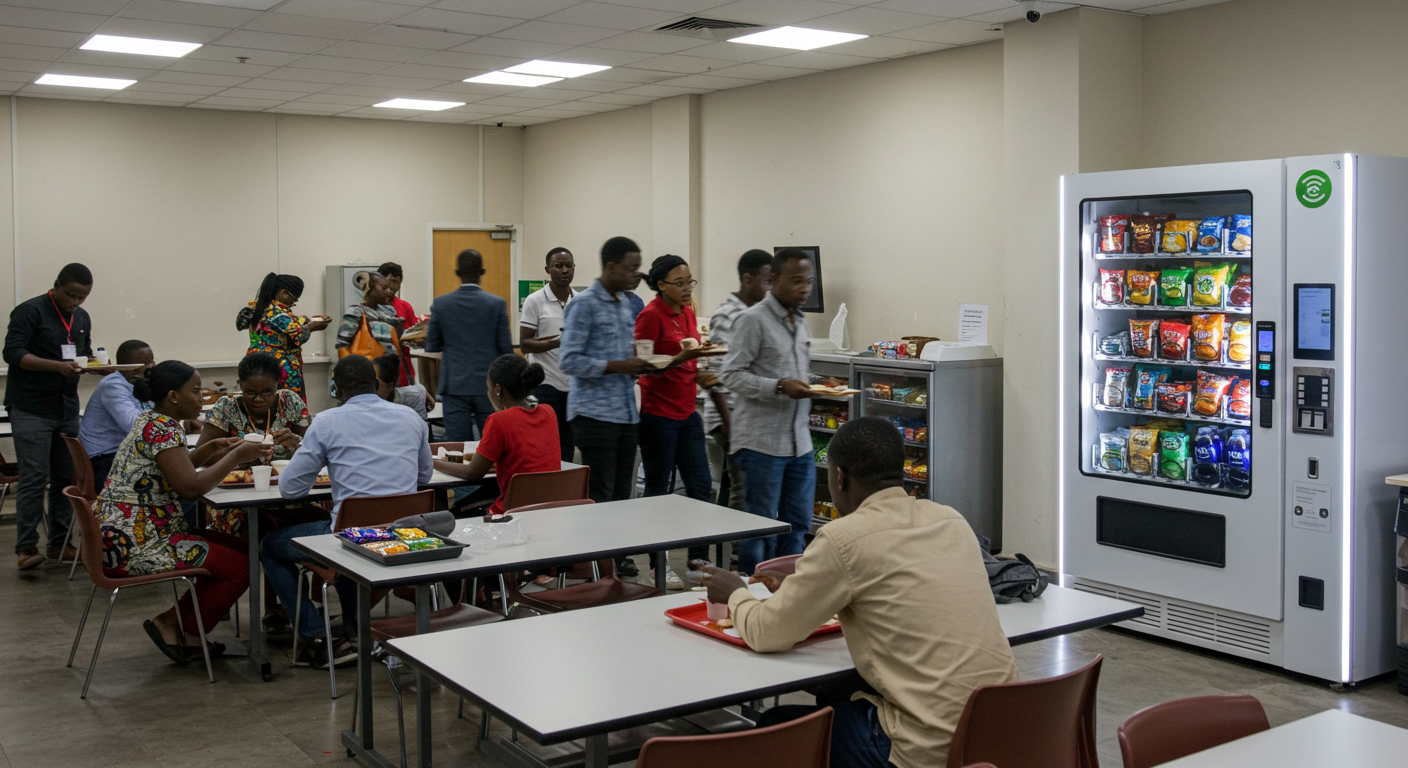
Running an office cafeteria in Ghana comes with unique challenges that many business owners underestimate. From rising food costs to space limitations and staffing issues, traditional cafeterias often become more of a burden than a benefit. Here's how smart vending solutions are helping Ghanaian companies overcome these obstacles.
Challenge #1: Budget Constraints and Rising Costs
The biggest challenge facing office cafeterias in Ghana is the escalating cost of operations. Between food procurement, staff salaries, utilities, and equipment maintenance, many businesses find their cafeteria expenses spiraling out of control.
The Hidden Costs Add Up
A typical office cafeteria in Accra requires significant ongoing investment:
- Staff costs: Cooks, servers, and cleaning staff can cost GHS 3,000-8,000 monthly
- Food wastage: Unsold meals often result in 20-30% waste daily
- Utilities: Cooking equipment and refrigeration drive up electricity bills
- Equipment maintenance: Commercial kitchen equipment requires frequent repairs
- Food safety compliance: Meeting health standards involves ongoing costs
How Vending Machines Solve Budget Issues
PlenishBox smart vending machines eliminate most cafeteria overhead costs:
- No staff required: Machines operate 24/7 without salaries or benefits
- Zero food waste: Products have longer shelf life and sell-by tracking
- Lower utility costs: Energy-efficient operation reduces electricity bills by 70%
- Minimal maintenance: Remote monitoring prevents costly breakdowns
- Predictable costs: Fixed monthly service fees make budgeting easier
Challenge #2: Space Limitations in Ghana Offices
Real estate costs in Accra and other major Ghanaian cities continue to rise, making every square meter valuable. Many businesses struggle to allocate sufficient space for a proper cafeteria without compromising productive work areas.
The Space Dilemma
Traditional cafeterias require substantial space allocation:
- Kitchen area: Minimum 20-30 square meters for cooking facilities
- Dining space: 1.5-2 square meters per employee for comfortable seating
- Storage areas: Refrigeration, dry goods, and cleaning supplies
- Service areas: Food preparation and serving counters
For a 50 employee office, this translates to 100-150 square meters of prime office space dedicated to food service space that could generate revenue or house additional productive teams.
Vending Machines: Maximum Convenience, Minimum Space
Smart vending solutions require just 2-4 square meters of floor space while serving the same number of employees. This space efficiency allows businesses to:
- Maximize revenue-generating office space
- Accommodate more employees in the same building
- Create flexible layouts that can adapt to business growth
- Maintain professional aesthetics without kitchen odors or noise
Challenge #3: Operational Complexity and Management Headaches
Managing a cafeteria involves numerous operational challenges that distract business owners from their core activities. From staff management to food safety compliance, the complexity often overwhelms companies that aren't in the food service business.
The Operational Burden
Cafeteria management requires expertise in multiple areas:
- Staff management: Hiring, training, and managing food service employees
- Menu planning: Balancing nutrition, cost, and employee preferences
- Inventory management: Preventing spoilage while maintaining variety
- Health compliance: Meeting Ghana Health Service food safety standards
- Financial tracking: Managing costs, pricing, and profitability
- Equipment maintenance: Ensuring kitchen equipment operates safely
Vending Machines: Set It and Forget It
PlenishBox handles all operational aspects, allowing business owners to focus on their core business:
- Automated restocking: We monitor inventory and restock before items run out
- Product variety: Curated selection of healthy snacks, beverages, and meals
- Maintenance included: Regular servicing and immediate repair response
- Compliance handled: All health and safety requirements managed for you
- Performance reporting: Monthly analytics on usage and employee satisfaction
Real Results from Ghanaian Businesses
Companies across Ghana that have switched from cafeterias to PlenishBox vending solutions report:
- 60-80% reduction in food service operational costs
- 90% less management time spent on food service issues
- 100+ square meters of reclaimed office space on average
- Higher employee satisfaction due to 24/7 availability and variety
- Improved workplace aesthetics without kitchen odors or noise
Making the Smart Switch
Transitioning from a traditional cafeteria to smart vending doesn't have to be disruptive. PlenishBox provides a complete transition plan that includes:
- Employee survey to understand food preferences
- Optimal machine placement consultation
- Staff training on the new system
- Gradual transition timeline to minimize disruption
- Ongoing support and optimization
The Bottom Line for Ghanaian Businesses
Office cafeterias may seem like a nice employee perk, but the hidden costs, space requirements, and operational complexity often make them unsustainable for most Ghanaian businesses. Smart vending solutions provide all the convenience employees want while eliminating the headaches business owners don't need.
The question isn't whether your business can afford to switch to vending machines, it's whether you can afford not to. With PlenishBox's proven track record and comprehensive support, making the switch has never been easier or more profitable.